
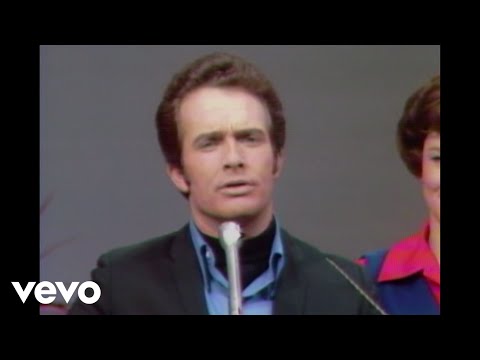
Merle Haggard’s “Okie From Muskogee”: A Timeless Classic in Music History
In the world of country music, few songs have managed to capture the essence of a specific cultural moment as vividly as Merle Haggard’s “Okie From Muskogee.” Released in 1969, this track not only defined a generation but also cemented Haggard’s status as a leading voice in American music. The song’s blend of poignant storytelling and social commentary resonates with listeners even today, making it a timeless anthem of pride and identity.
Merle Haggard: A Cornerstone of Music
Born on April 6, 1937, in Oildale, California, Merle Haggard grew up in a challenging environment that greatly influenced his music. His childhood was marked by poverty, his father’s death, and a troubled youth that led to stints in reform school and prison. However, these experiences shaped Haggard’s perspective, allowing him to weave authentic narratives into his songs. By the time he released “Okie From Muskogee,” Haggard had already established himself as a key figure in the Bakersfield sound, a gritty, honky-tonk style of country music that emerged in the 1950s and 1960s. His deep, emotive voice and masterful songwriting skills quickly garnered attention, solidifying his place in the pantheon of country legends.
The Era of “Okie From Muskogee”
The late 1960s were a time of social upheaval in the United States. The Vietnam War was in full swing, counterculture movements were challenging the status quo, and traditional values were being questioned across the country. At this crossroads, “Okie From Muskogee” emerged as a response to the changing landscape. The song’s portrayal of small-town life and the defense of conservative values resonated with many Americans who felt alienated by the rapid societal changes occurring around them. It served as a rallying cry for those who identified with the struggles and aspirations of the working-class, particularly in the heartland of America.
Songwriting Credits and Significance
The Storyline of “Okie From Muskogee”
The song tells the story of a young man from Muskogee, Oklahoma, who proudly reflects on his hometown’s values and way of life. It presents a series of contrasts between the traditional lifestyle he cherishes and the counterculture movements of the time. The protagonist expresses pride in simple pleasures: “We don’t smoke marijuana in Muskogee, / We don’t take our trips on LSD.” This dichotomy illustrates the tension between the conservative values of small-town America and the liberal ideologies that were gaining traction in larger urban centers. The narrative invites listeners to consider their own identities and the cultural divides that define them.
Lyrical and Thematic Analysis
Vocal Delivery and Emotional Interpretation
Haggard’s vocal delivery in “Okie From Muskogee” is both powerful and nuanced, capturing the complex emotions embedded within the lyrics. His voice carries a sense of authority and authenticity that draws listeners in, making them feel the weight of the sentiments expressed. The slight twang and earnestness in his tone convey both pride and defensiveness, reflecting the inner conflict many faced during a time of cultural unrest. Haggard’s ability to convey emotion through his vocal interpretation is one of the many reasons why “Okie From Muskogee” remains a beloved classic.
Instrumentation and Production Style
The instrumentation of “Okie From Muskogee” is characteristic of the Bakersfield sound, featuring a blend of traditional country instruments with a raw, stripped-down production style. The song prominently features a twangy electric guitar, a steady drumbeat, and a prominent steel guitar that adds depth to the arrangement. The production is straightforward, allowing Haggard’s voice and the song’s lyrics to take center stage. This approach resonates with the song’s themes of authenticity and simplicity, reinforcing the message that the beauty of life lies in its unembellished moments.
Chart Performance and Cultural Impact
Legacy within Classic Music
Over the decades, “Okie From Muskogee” has solidified its place as a classic in the country music genre. Haggard’s unique ability to articulate the experiences and values of everyday Americans has influenced countless artists and songwriters who followed in his footsteps. The song has been referenced in various forms of media, including films, television shows, and even political discourse. Its themes of pride, resistance, and identity continue to be relevant, making it a touchstone for discussions about American culture and values. As a result, “Okie From Muskogee” remains a significant part of Merle Haggard’s legacy and a quintessential example of the power of music to reflect and shape societal narratives.