
## A Life Forged in Hardship
Born Eleanora Fagan in 1915, Billie Holiday’s early life was marked by extreme poverty and unimaginable abuse. By the time she was a teenager, she was singing in Harlem nightclubs, her voice carrying a weight of experience far beyond her years. She didn’t just sing songs; she lived them.
## The Birth of a Protest Anthem
In 1939, Holiday was introduced to a poem by Abel Meeropol titled “Bitter Fruit,” which detailed the horrific lynchings in the American South. She set it to music as “Strange Fruit.” When she first performed it at Café Society, the room went silent. The darkness of the lyrics—comparing the bodies of Black Americans to fruit hanging from poplar trees—was a revolutionary act of defiance.
## Defying the Status Quo
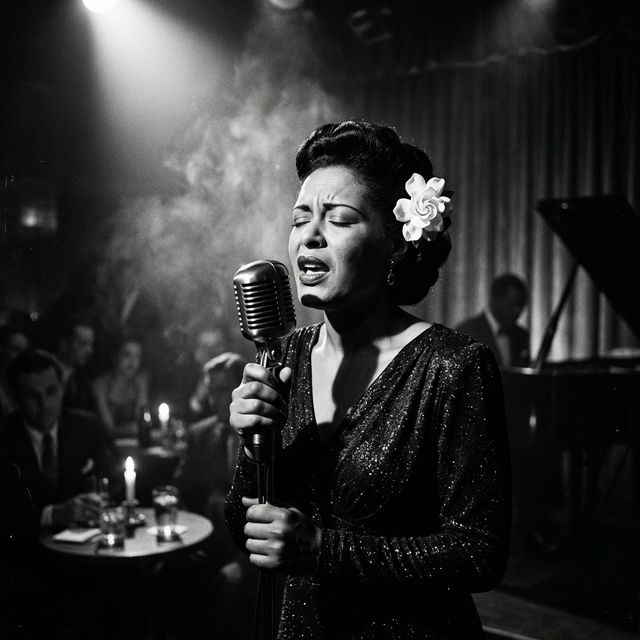
The song was so controversial that her record label refused to record it. Holiday had to fight to get it released on a smaller label. Despite the risks to her career and personal safety, she made it a staple of her live shows, often closing her sets with it. The lights would be dimmed, and she would disappear into the shadows after the final haunting note.
## A Legacy of Courage
Billie Holiday’s life was short and plagued by legal battles and addiction, but her impact on music and civil rights was monumental. “Strange Fruit” became a foundational anthem of the Civil Rights Movement, proving that a single voice could challenge the conscience of a nation.
## Listen to the Haunting “Strange Fruit”
Experience the raw power and historical significance of Billie Holiday’s most famous performance.